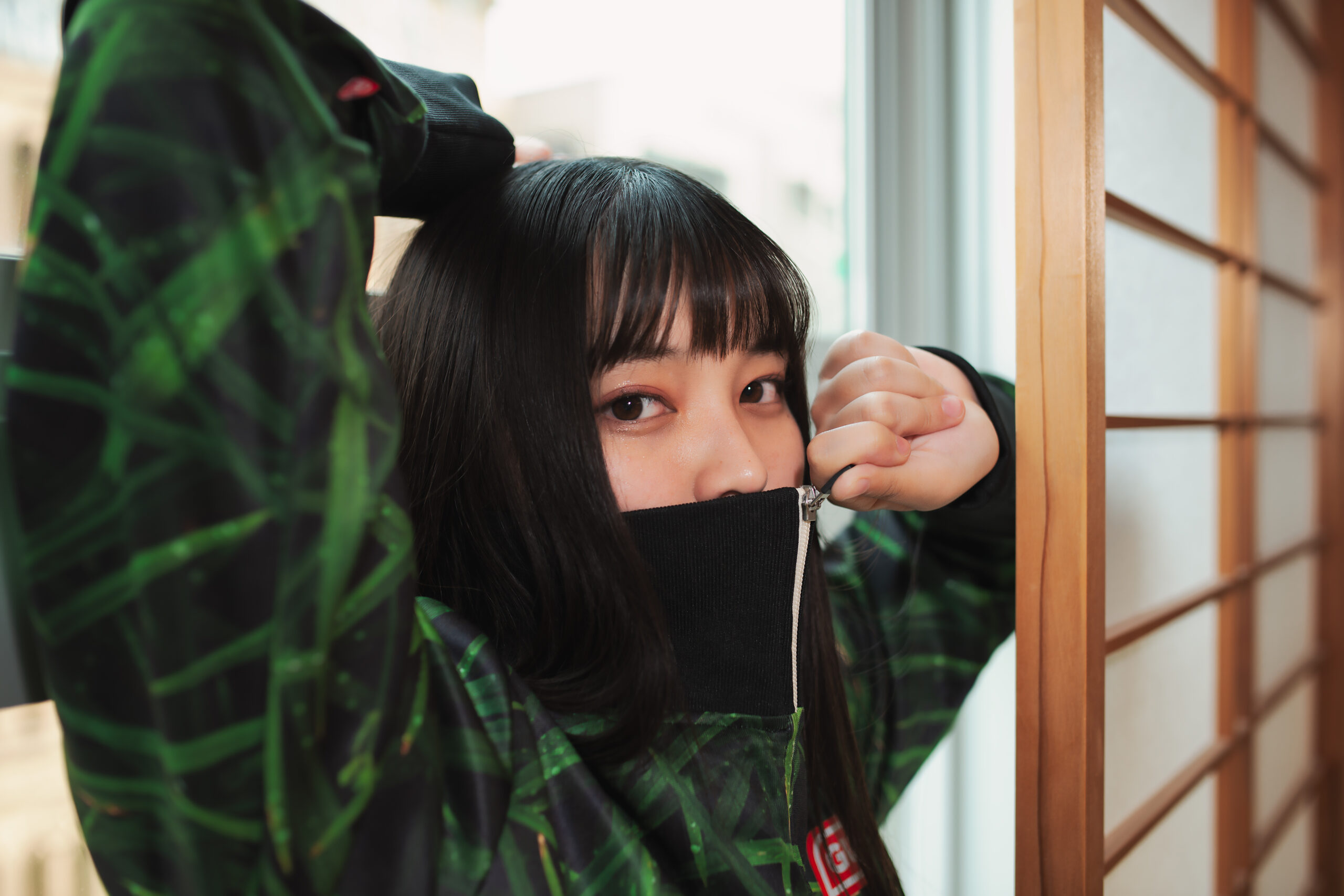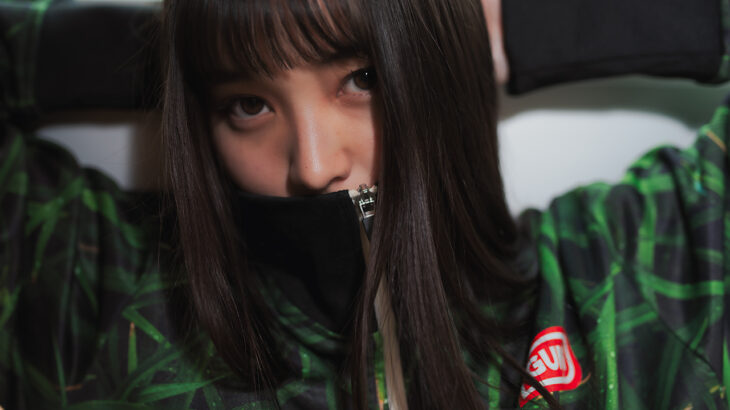
tracktop girl is a continuous record of portraiture featuring individuals in track jackets.
It is not about “cuteness,” “sports,” or mere “fashion.”
It is about what is born inside a person the moment they pull the zipper to the top.
That single point of intersection is all I seek to capture.
Closing the Zipper Creates the “Inner World”
Physically, pulling a zipper from the chest to the chin is a movement of only a few centimeters.
However, the moment the slider touches the jaw, the outside air is cut off.
The humidity of one’s own breath begins to fill the space inside the fabric.
That enclosed heat allows one to confirm their own silhouette from the inside out.
The Slow Leak of the Self in Half-Zips
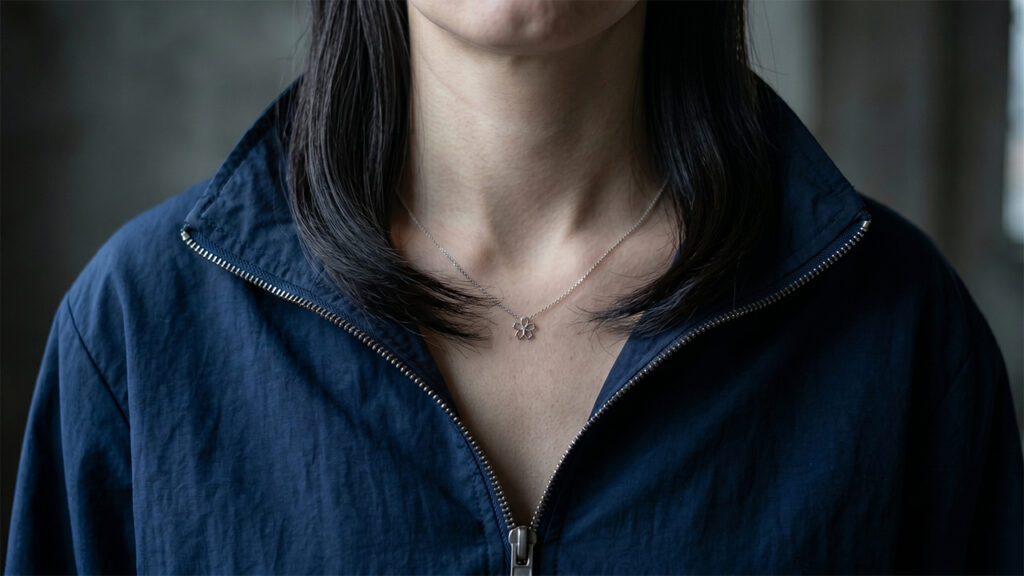
An exposed collarbone makes a person vulnerable.
Body heat escapes from an open neckline.
In its place, the gaze of others and the “to-do list” of the day come rushing in.
In spaces where we are expected to remain “open,” even our own breath ceases to belong to us.
To choose a half-zip is to carry a small, exposed vulnerability throughout the day.
Safety in a Space with No Escape

The moment the zipper teeth lock under the chin, your own body temperature begins to stagnate within.
It is a locked room. You cannot get out.
But simultaneously, nothing from the outside can enter.
Only within that airtight room can a person finally exhale a breath that reaches the bottom of their lungs.
Materiality as the Final Boundary
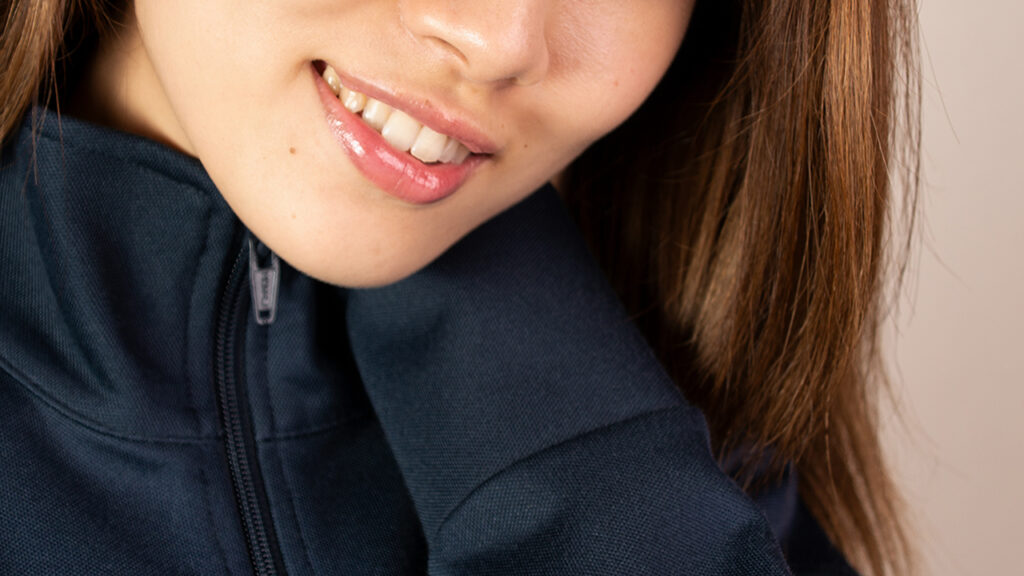
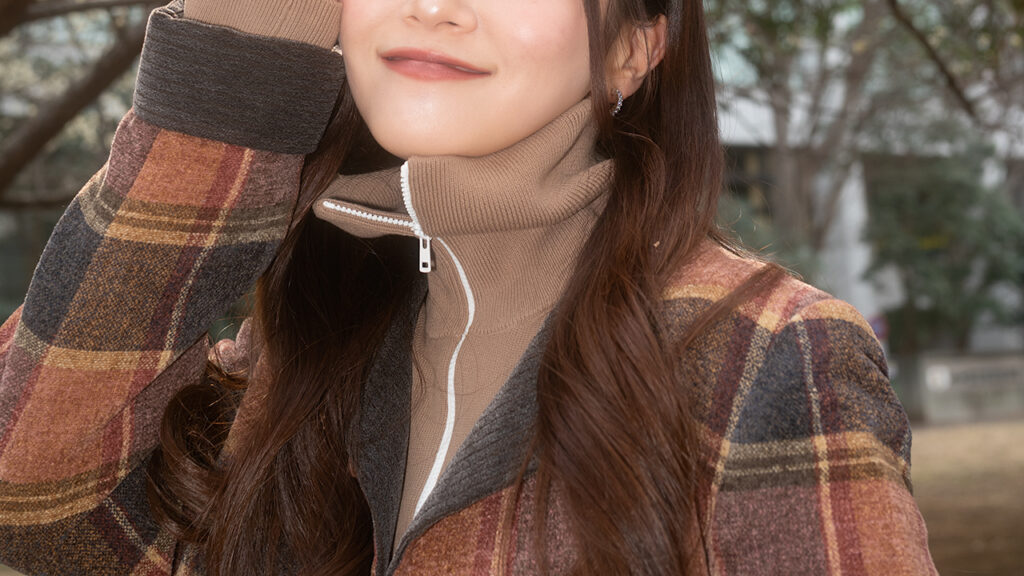
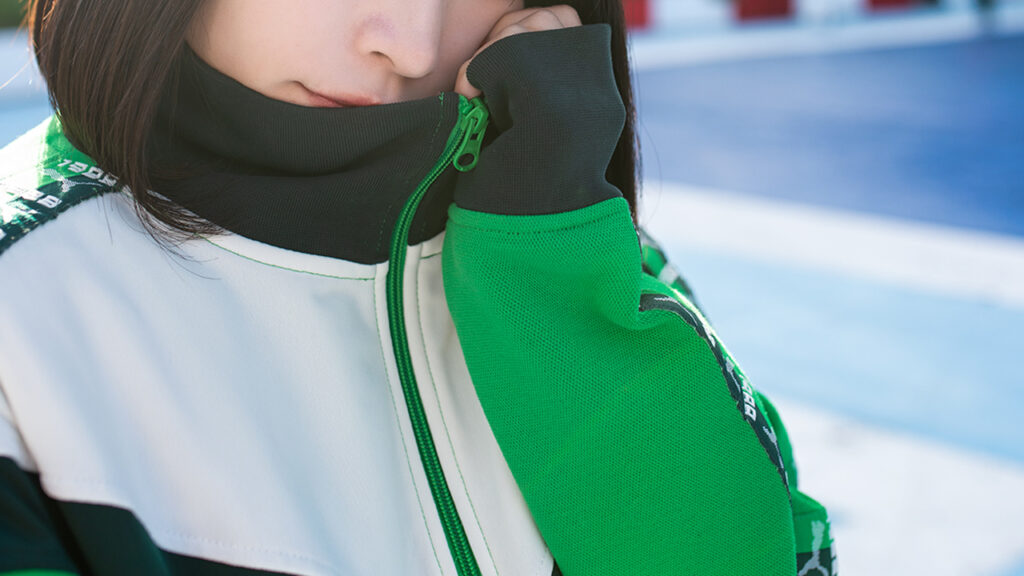
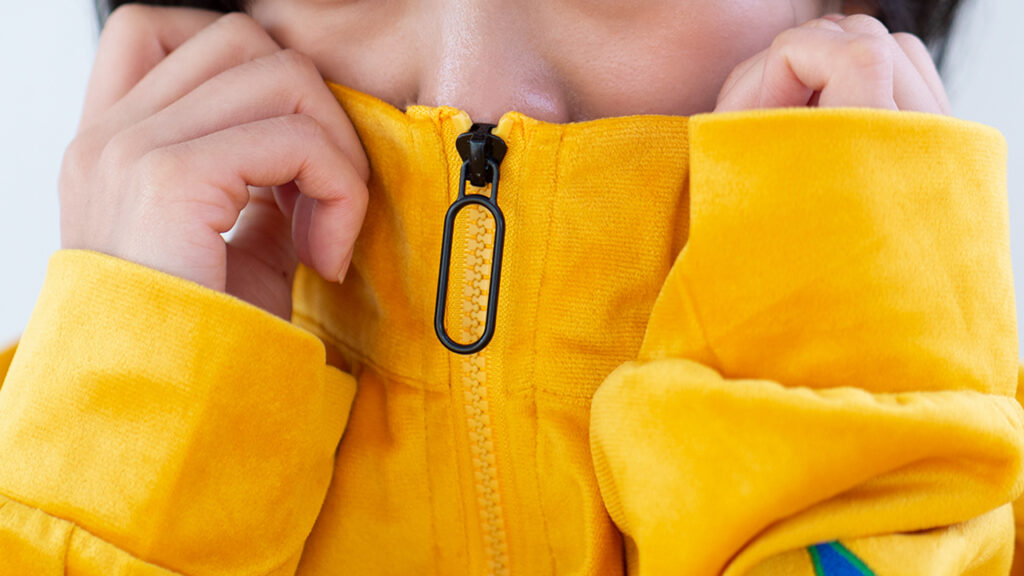
Why does the same track jacket feel so different to the touch?
The choice of material here is not about aesthetics, but a question of what the “self” needs on that specific day.
There are days that demand the rigidity of nylon.
There are days saved by the weight of cotton.
There are nights where the smoothness of polyester feels just right.
It is not about which material is “correct,” but which one defines your silhouette today.
Feeling the Zip in the Jawbone
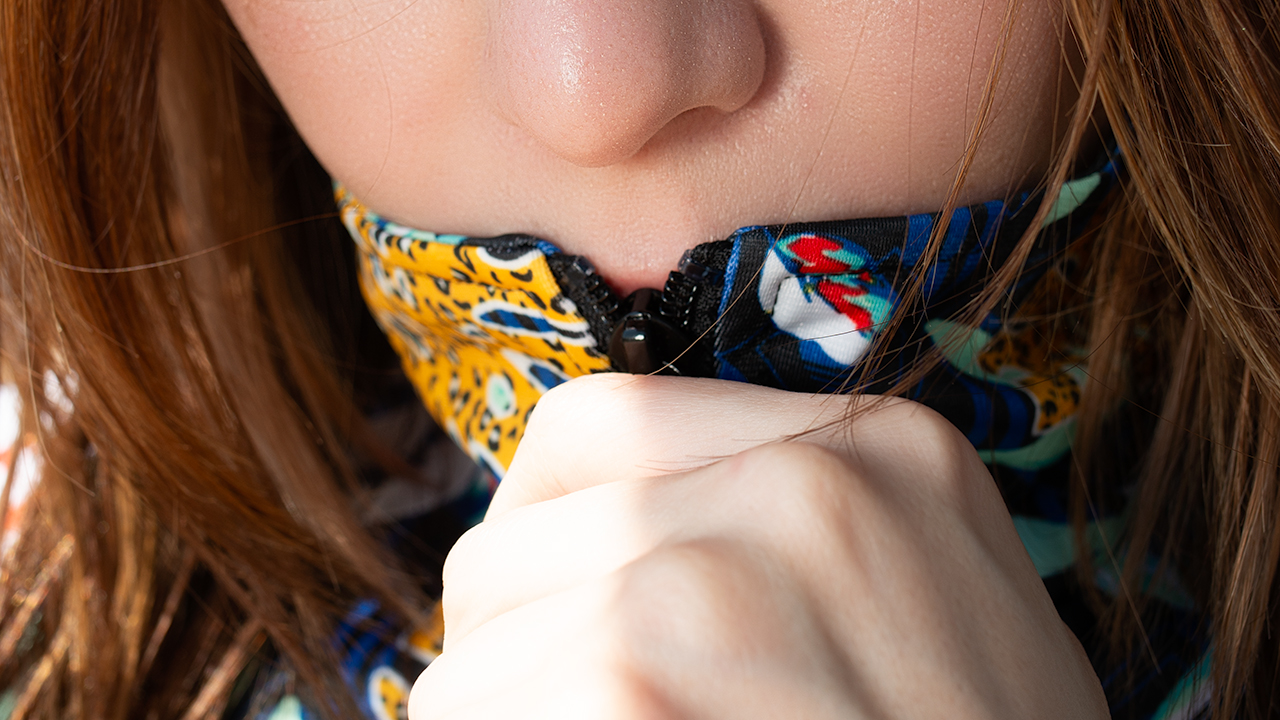
In a silent room, I pull up the zipper.
Whether it is metal or resin, the sensation of the teeth interlocking one by one is transmitted from the fingertips to the jawbone.
The slider passes the collarbone, overtakes the Adam’s apple, and stops just under the chin.
In that instant, communication with the world is severed.
Photographing Silence: Beyond the “Kawaii” Label
There are two types of photographs: those taken to be seen, and those taken to be preserved.
I seek the latter.
Do Not Stain the Moment with “Kawaii”
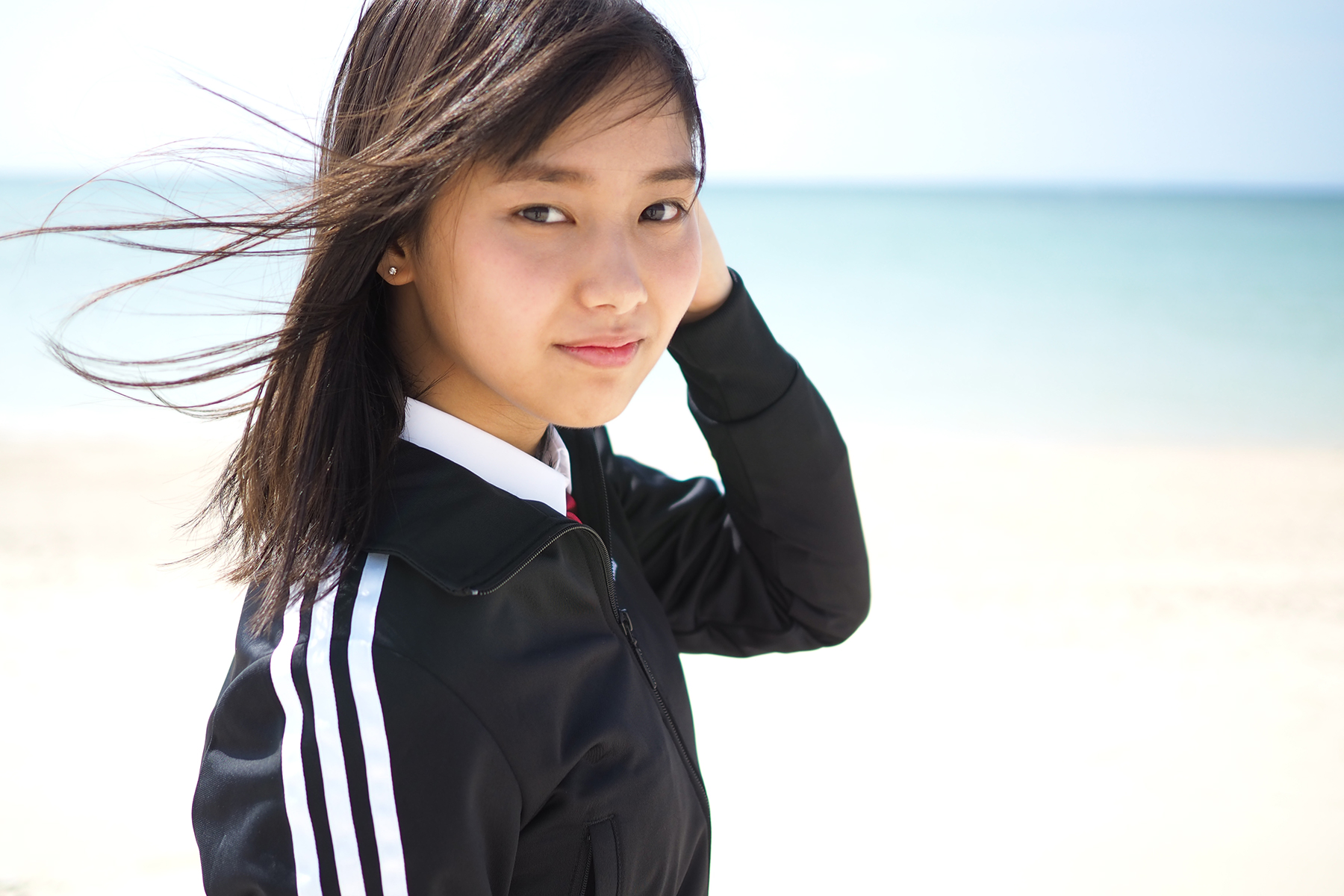
“Kawaii” is a label.
I want to capture the quiet strength in the eyes of those who know the heat pooling inside their jacket.
What remains after the world has been shut out?
I have no reason to photograph anything else.
What I seek in these portraits is existence (existential truth) that lies outside the realm of social validation.
Sharing the Stillness for the Next 100 Years
Words rot. Their meanings change as contexts shift.
But texture does not rot.
The angle at which the fabric reflects light; the sensation of the slider stopping under the chin.
If that density remains within a photograph, it will live on in someone’s physical memory long after the servers have vanished.
When someone looks at these photos 100 years from now, they will feel a slight heat in their throat.
I take photos today for that exact moment.
To Zip Up is to Protect